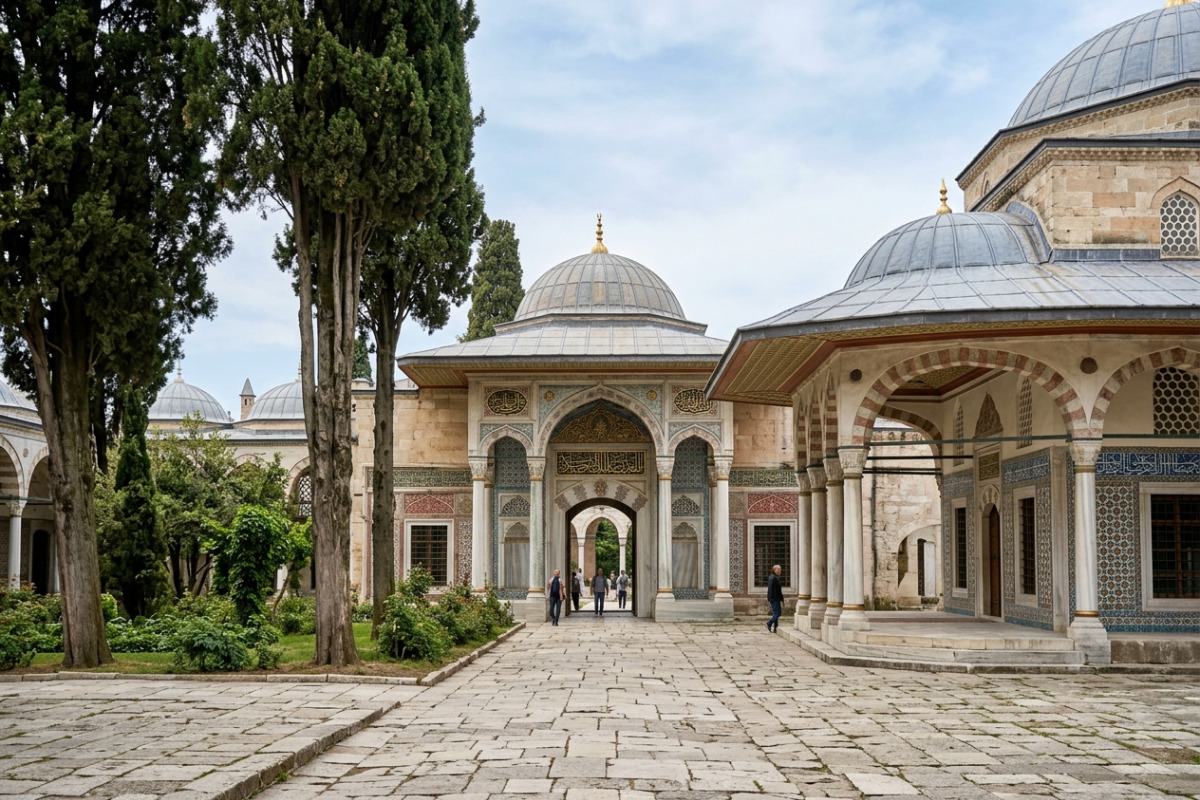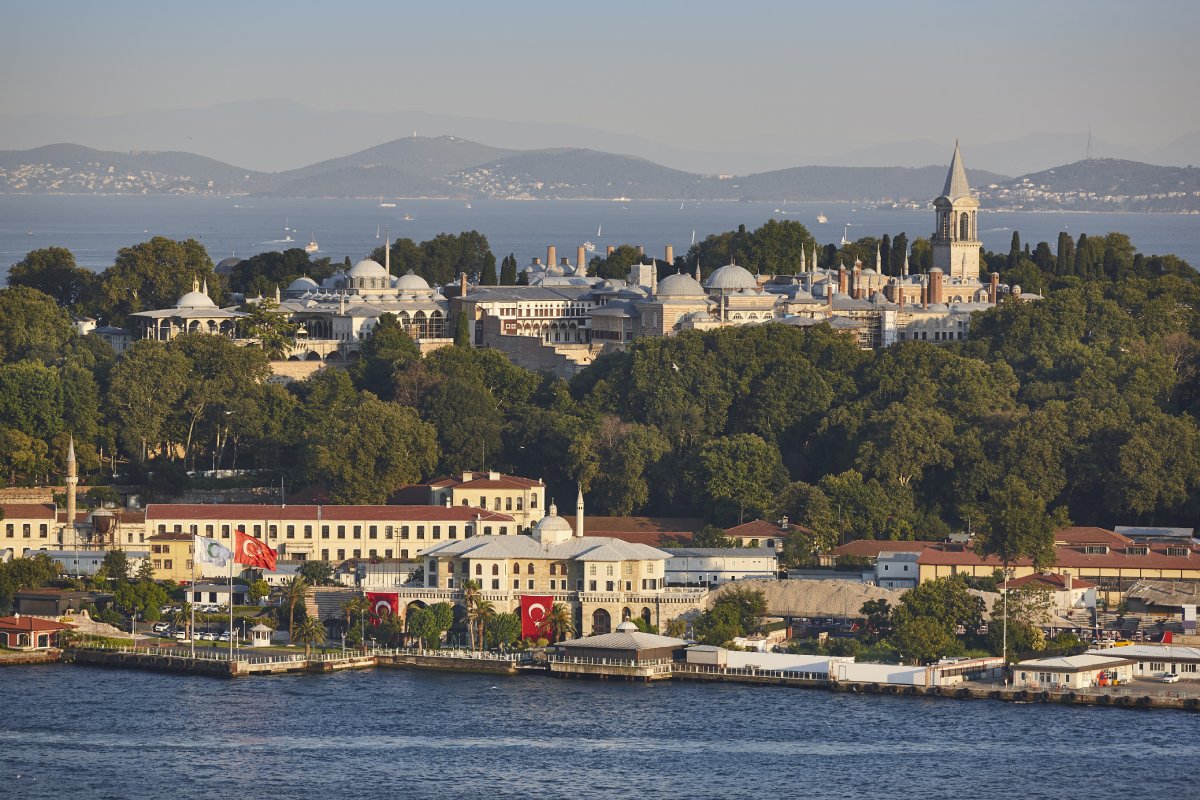
Standing upon the Seraglio Point, overlooking the shimmering waters where the Bosphorus meets the Golden Horn, Topkapi Palace is far more than a museum or a relic of stone and marble. It is a vast repository of secrets, a silent witness to an empire that spanned three continents for six centuries. Walking through its Imperial Gate today, in January 2026, one can almost hear the faint echoes of janissaries marching and the hushed whispers of court officials deciding the fate of nations. While the architecture is undeniably breathtaking, it is the human stories—the intense dramas of love, ambition, jealousy, and survival—that truly breathe life into these courtyards. To understand the heart of the Ottoman Empire, one must look beyond the tile work and delve into the legends that linger in the air like the scent of old parchment and rosewater.
The Harem: A Golden Cage of Ambition and Romance
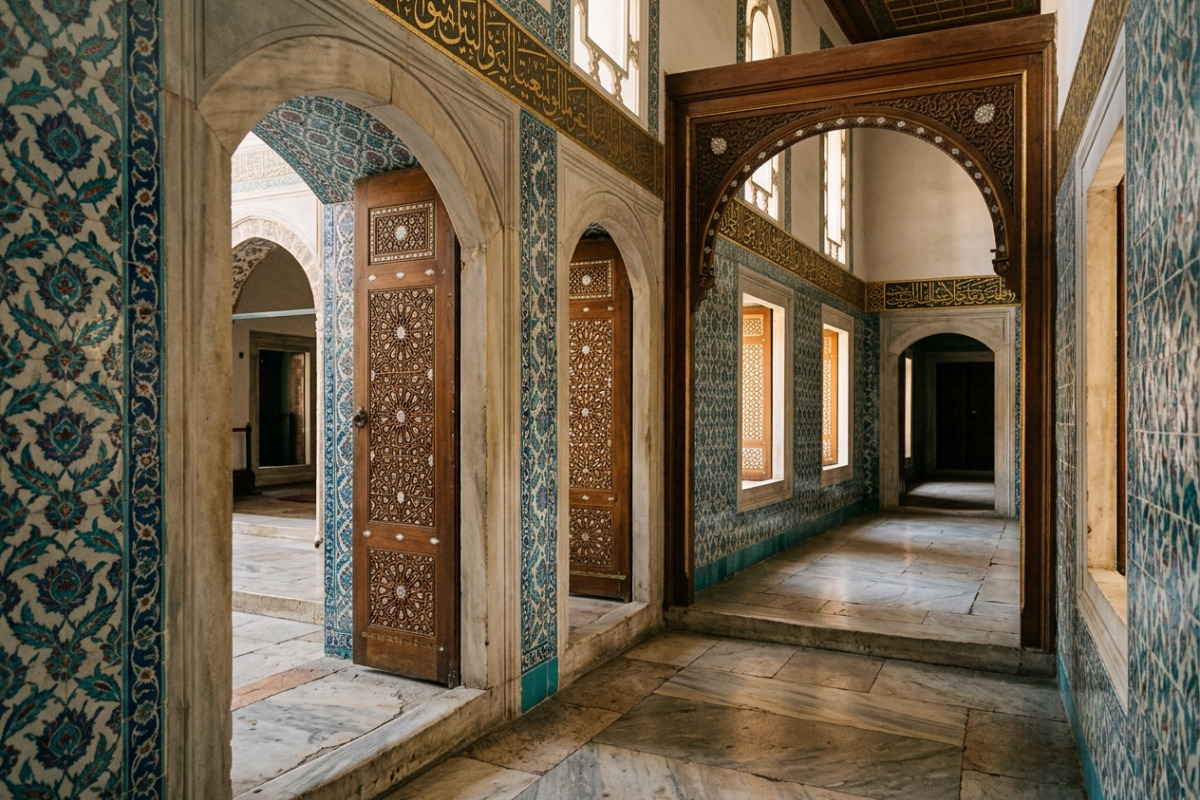
Perhaps no section of the palace ignites the imagination quite like the Harem. Often misunderstood by the Western world as merely a pleasure quarter, the Harem was actually the private residence of the Sultan and his family, functioning as a strictly disciplined institution. It was a place of immense political power, where the hierarchy was rigid and the stakes were life or death. Within these tiled walls, the most captivating tales of romance and power struggles unfolded, shaping the destiny of the empire.
The Rise of Roxelana: A Love Story that Changed History
Among the thousands of women who passed through the Harem, one name stands above all others: Hürrem Sultan, known in the West as Roxelana. Her story is the ultimate legend of Topkapi. Captured as a slave from present-day Ukraine, she rose to become the legal wife of Sultan Suleiman the Magnificent, breaking centuries of Ottoman tradition. Legends say her laughter was enchanting and her intellect sharp enough to rival the Grand Viziers. She did not merely survive the Harem; she mastered it.
The romance between Suleiman and Hürrem is immortalized in the letters they exchanged, filled with poetry and longing. However, her rise was not without intrigue. To secure the future of her own sons, she is rumored to have orchestrated the downfall of Suleiman’s eldest son, Mustafa, and his grand vizier, Pargali Ibrahim Pasha. Walking through the Courtyard of the Queen Mother today, visitors are treading the very ground where Hürrem consolidated her power, transforming the Harem into a political powerhouse known as the Sultanate of Women.
The Valide Sultan: The Power Behind the Throne
The struggle for dominance within the Harem often culminated in the position of the Valide Sultan (Queen Mother). This figure held absolute authority over the Harem and often swayed the Sultan's decisions. The legends of Turhan Sultan and Kösem Sultan reveal a world where maternal protection often clashed with ruthless politics. These women built mosques, engaged in charity, and occasionally ruled the empire as regents, proving that in Topkapi, power was not solely a male prerogative.
The Mystery of the Spoonmaker’s Diamond
Beyond the human dramas, Topkapi is home to treasures that carry their own mythical weight. The Imperial Treasury houses the Spoonmaker’s Diamond (Kaşıkçı Elması), an 86-carat pear-shaped beauty surrounded by a double row of 49 brilliants. It is mesmerizing to behold, yet its origins are shrouded in contradictory legends that blur the line between fact and folklore. How did such a priceless gem end up in the Ottoman treasury?
There are several competing narratives regarding the diamond's discovery, each adding a layer of mystique to the stone:
| Legend Name | The Story | Outcome |
| The Fisherman's Find | A poor fisherman found the shiny stone in a trash heap in Eğrikapı. Not knowing its worth, he took it to a jeweler. | The jeweler tricked him, trading the priceless diamond for three wooden spoons. |
| The Pigot Diamond Theory | Some historians suggest it was purchased by a French officer named Pigot and later bought by Napoleon’s mother. | It was allegedly sold to save Napoleon from exile, eventually finding its way to the Ottoman court. |
| Tepedelenli Ali Pasha | The diamond was believed to be owned by the rebel governor Ali Pasha. | After his execution for treason, his treasures, including the diamond, were confiscated by the Sultan. |
Regardless of which story you choose to believe, the diamond remains a symbol of the fluctuating fortunes of the empire—a gem that traveled through trash heaps, rebellions, and royal courts to rest in the heart of Istanbul.
The Cage: Shadows of Madness and Solitude
While the palace dazzles with gold and turquoise tiles, it also harbors dark corners that tell of psychological torment. One of the most chilling aspects of Topkapi's history is the practice of fratricide and the subsequent institution of the "Kafes" (The Cage). In the early empire, a new Sultan would often execute his brothers to prevent civil war, a practice codified by Mehmed the Conqueror. However, as the empire matured, this bloody tradition was replaced by lifelong imprisonment.
Potential heirs to the throne were confined to the Shimshirlik (Boxwood) apartments, living in constant fear of execution. Legends abound of princes who entered the Cage as young men and emerged decades later as Sultans, their minds shattered by isolation. The tragic tale of Sultan Ibrahim "the Mad" is often recounted; his erratic behavior and paranoia were direct results of his years spent in the gilded prison of the Kafes. These rooms, though lavishly decorated, serve as a somber reminder of the heavy price paid for absolute power.
The Sacred Relics and Mystical Protections
Topkapi Palace is not only a political center but also a spiritual sanctuary. After the conquest of Egypt in 1517, the Caliphate passed to the Ottoman Sultans, and with it came the Sacred Relics of Islam. These items are housed in the Chamber of the Holy Mantle, a space charged with immense spiritual energy. Legends suggest that the presence of these relics provided a mystical protection over the empire, safeguarding it from total collapse during its most turbulent times.
Among the most revered items displayed are:
- The Holy Mantle (Hırka-i Şerif): The cardigan worn by the Prophet Muhammad.
- The Prophet’s Footprint: An impression preserved in gold.
- The Staff of Moses: Believed to be the very staff used to part the Red Sea.
- The Sword of David: An ancient weapon with inscriptions that historians have studied for centuries.
A tradition established centuries ago continues to this day: the continuous recitation of the Quran in this chamber. It is said that the recitation has never ceased, day or night, for hundreds of years, creating a continuous spiritual shield around the relics and the palace itself.
Echoes at the Executioner’s Fountain
Before leaving the palace grounds, visitors often pass the Fountain of the Executioner (Cellat Çeşmesi) near the Imperial Gate. It is a seemingly ordinary stone structure, yet the legends attached to it are bone-chilling. This was the spot where the palace executioners would wash their hands and swords after carrying out death sentences. The executioners were figures of dread, often chosen from those who were mute or had their tongues removed to ensure the secrets of the victims' last words died with them.
The legends say that the souls of those executed within the palace walls still linger near the fountain on foggy nights. While such ghost stories are common in ancient cities, the atmosphere in this particular corner of the First Courtyard carries a palpable weight, a stark contrast to the manicured gardens of the Tulip Era nearby.
A Living Legacy
Unearthing the legends of Topkapi Palace reveals a tapestry woven with threads of glory and tragedy. It is a place where the air is thick with the memories of Roxelana’s ambition, the glimmer of the Spoonmaker’s Diamond, and the silent prayers recited over sacred relics. These stories transform a visit from a simple sightseeing tour into a journey through the human condition.
As you wander through the labyrinthine corridors and expansive courtyards, remember that you are walking on the stage of history. The sultans, the concubines, the viziers, and the executioners may be gone, but their tales of power and intrigue remain, etched forever into the stones of this magnificent complex.