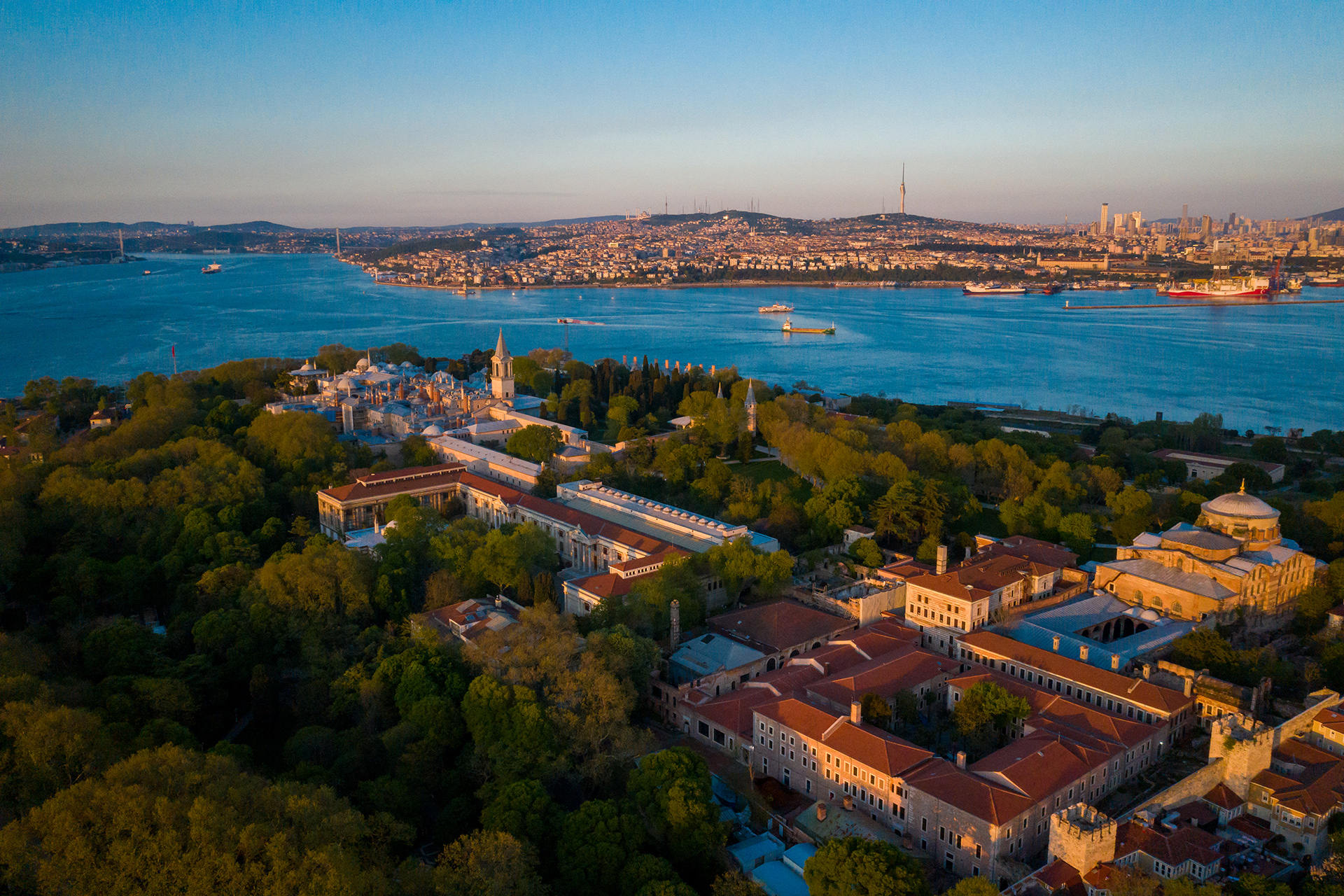
Masterpieces of architecture, sacred relics, and imperial treasures—discover the heart of the palace.
The Harem was not merely a home but a hidden city within the palace walls. A strictly hierarchical world where the Valide Sultan (Queen Mother) reigned supreme over hundreds of residents.
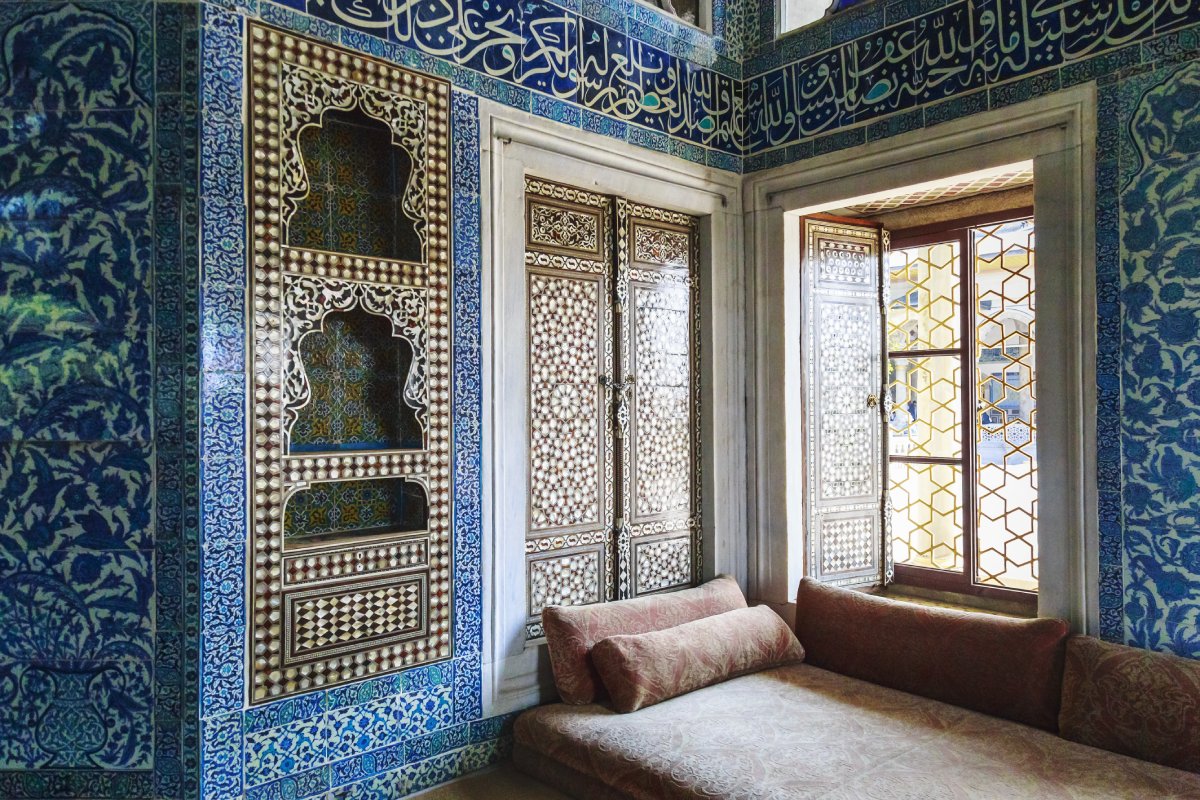
Wander through the "Courtyard of the Favorites", marvel at the intricate Iznik tiles of the "Twin Kiosk", and imagine the secretive life of the Ottoman dynasty in these opulent halls.
Overlooking the Golden Horn, this was the primary living space for the Sultan's favorite consorts. The wooden balconies and intricate latticework allowed them to view the breathtaking gardens while remaining unseen.
The grandest suite in the Harem, reflecting the immense power of the Queen Mother. Features the "Dome with Frescoes" and direct access to the Sultan's private privy chamber.
A narrow, cobbled passage dating back to the 15th century. It is said the Sultan passed through here on festive days, scattering gold coins to the concubines lining the walls.
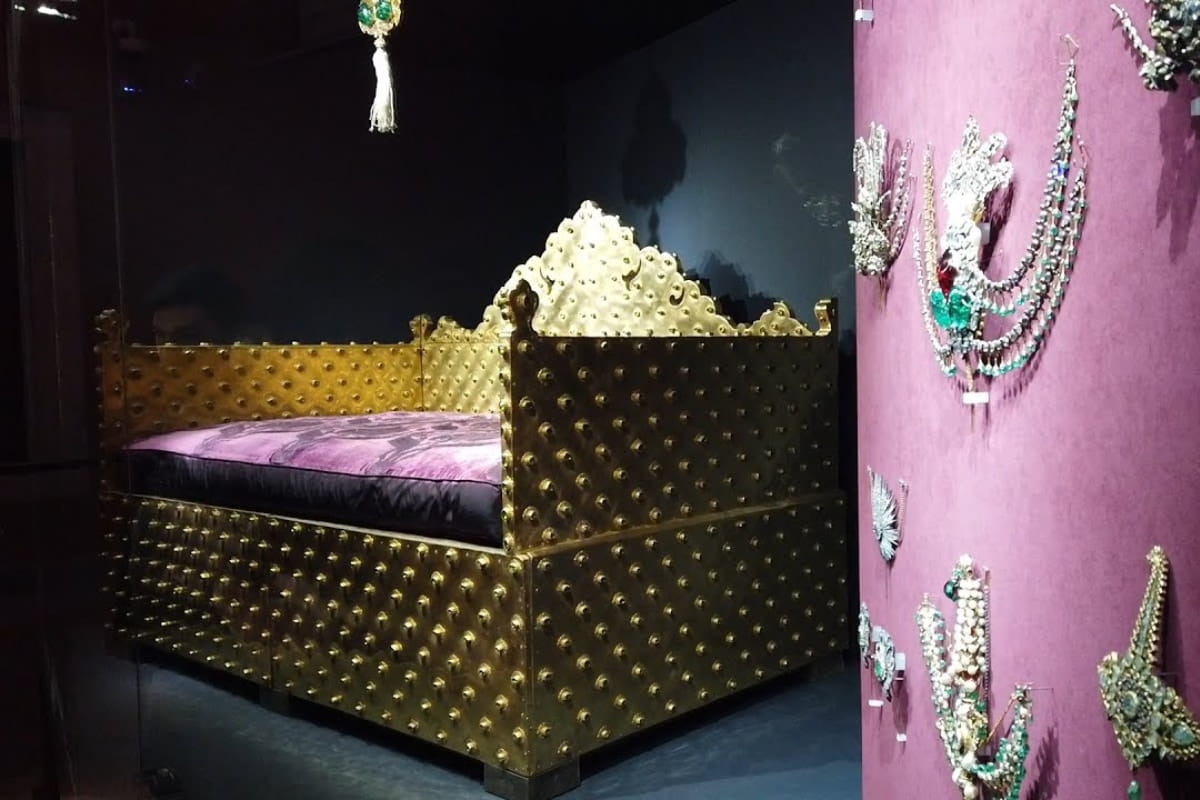
A blinding collection of emeralds, rubies, and diamonds that reflects the absolute power of the Ottoman Sultans.
One of the world's largest
Emerald Studded Weaponry
A gift intended for Nadir Shah of Persia, this dagger features three enormous emeralds on the hilt and a watch set into the pommel. It is the symbol of the Treasury.
The 86-carat pear-shaped diamond, surrounded by a double row of 49 old-mine cut diamonds. Its origins are shrouded in legends of a fisherman finding it in trash.
A golden throne sent by Nadir Shah to Sultan Mahmud I. It is a masterpiece of Mughal art, decorated with pearls, emeralds, and rubies on red and green enamel.
Sacred artifacts of Prophet Muhammad (PBUH) and other prophets, preserved with utmost reverence for centuries.
"The recitation of the Holy Quran has continued uninterrupted in this chamber for over 500 years, day and night."
The cloak of Prophet Muhammad (PBUH), kept in a golden chest. It is the most sacred item in the collection and was brought to Istanbul by Sultan Selim I.
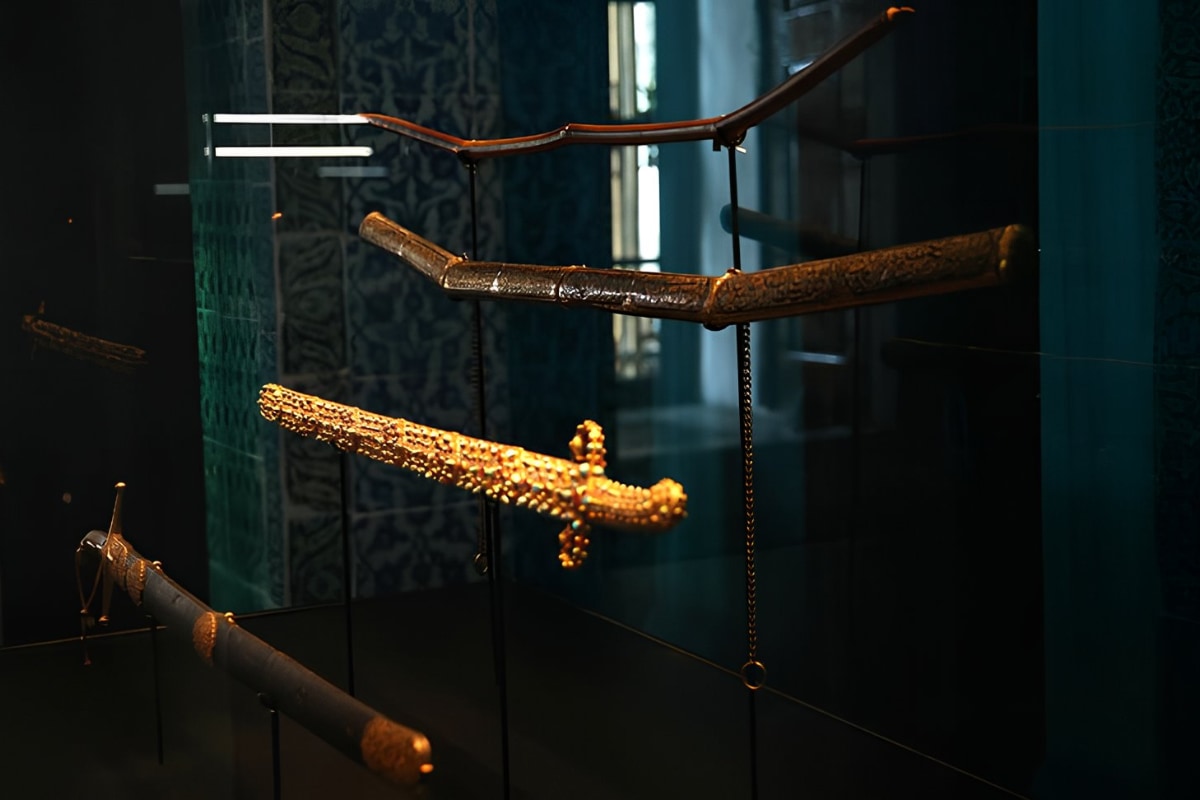
The swords belonging to the Prophet and the four Caliphs. These weapons symbolize the caliphate authority passed to the Ottoman Sultans.
A granite bowl attributed to Patriarch Abraham. It has been used for centuries to distribute ceremonial pilaf or water during sacred nights.